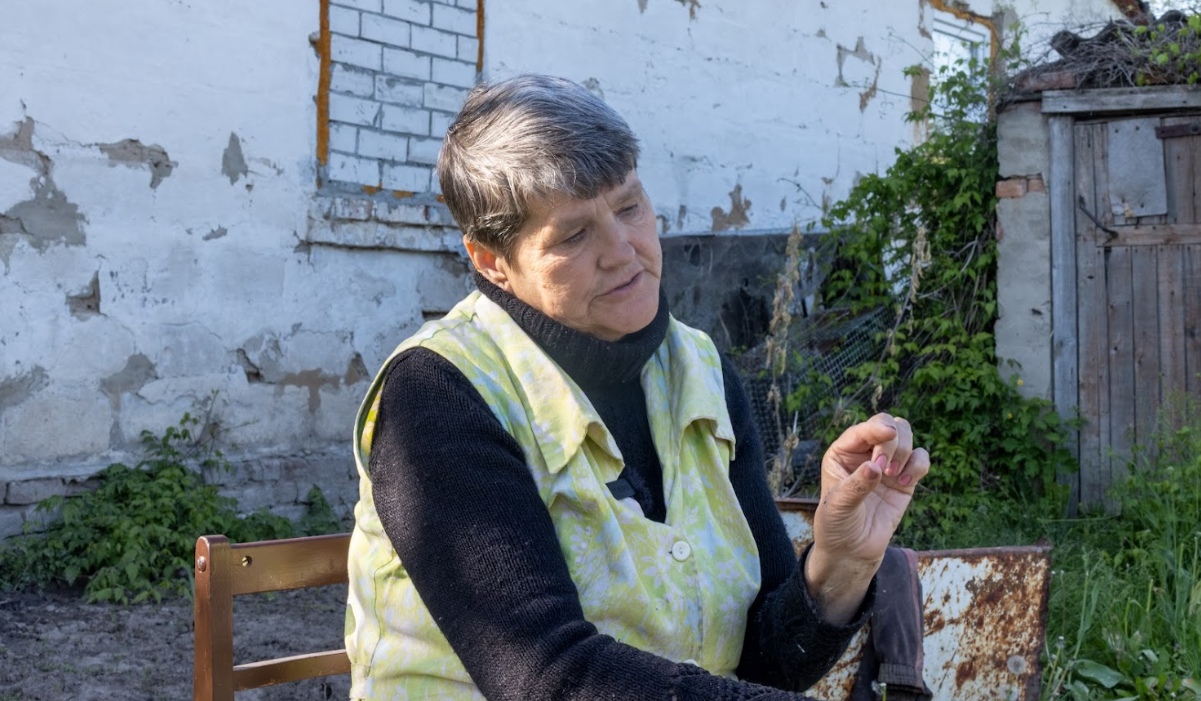
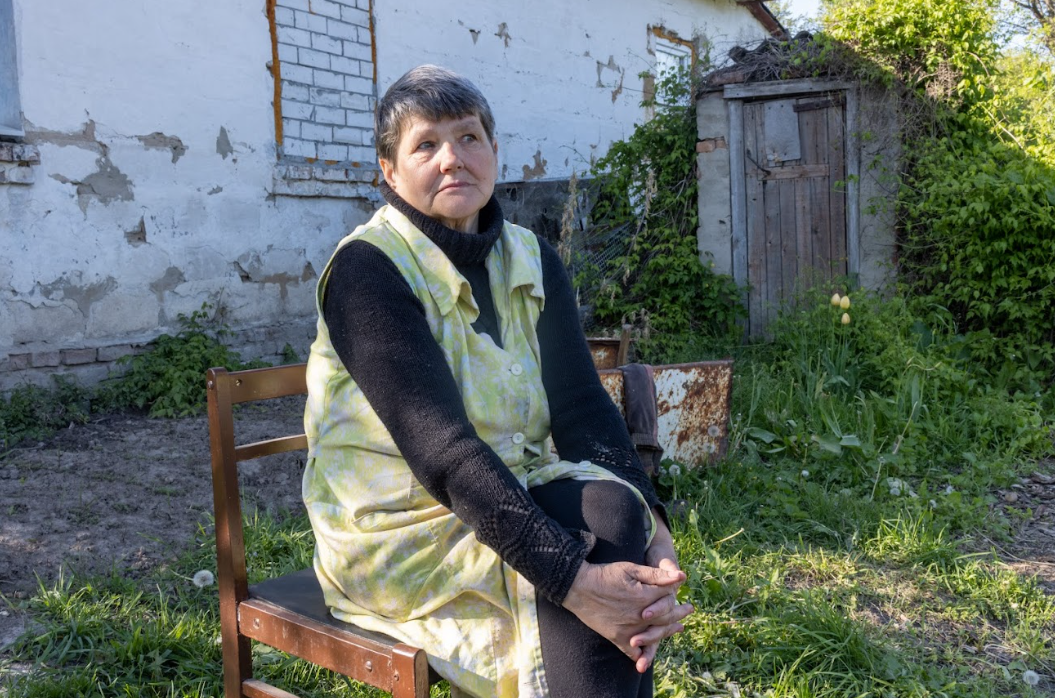
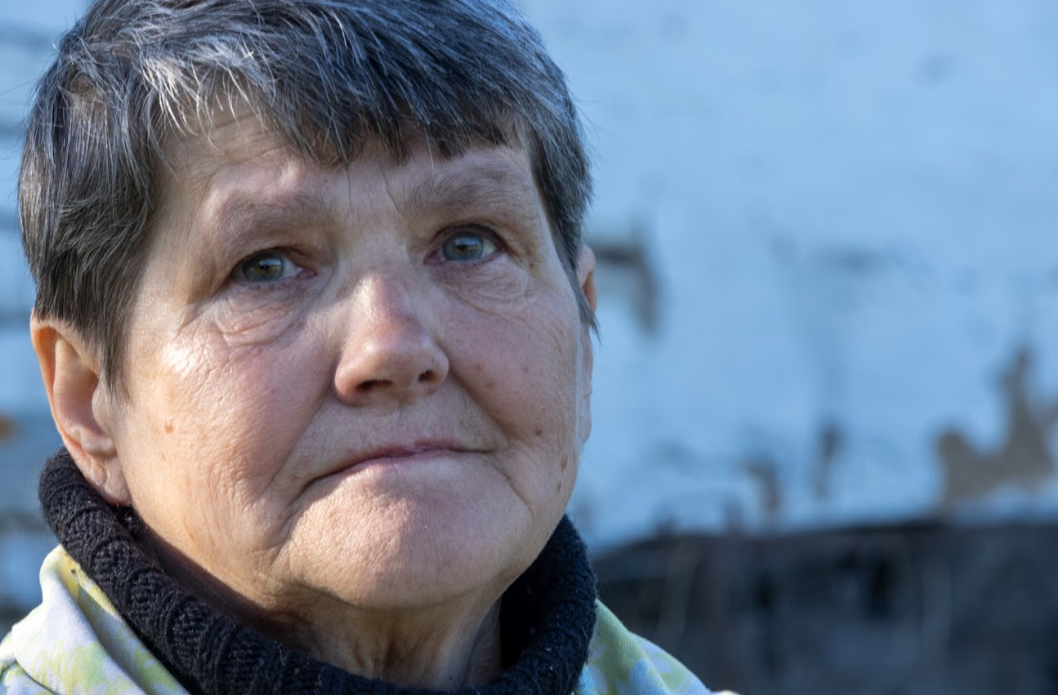
I got up sometime at five o'clock [February 24, 2022], not much shooting yet. She woke up her son (he lives with us) and said: "The house must be a war". It was so tense. This is how very memorable it was.
In the first days, they shot far away. We somehow simply did not feel the war. They were very worried about their son, who was in Chernihiv, his wife is pregnant. She was somehow less worried about her daughter, because she lived here in Buda. And it turned out the other way around, on March 7, she was killed by a shrapnel in the head, she was 30 years old. And my son is currently fighting, I am also worried.
Until the Russians entered, we did not feel the war. They shot very far away, saw Chernihiv burning. Then, when the Russians entered, we believed that this was really a war.
Olya just arrived from Buda. They spent the night here, and there they already started shooting from Lukashivka, from Hrabivka, and from Viktorivka. That side of the village was already on fire. They [Russians], when they arrived, came to us immediately. They stayed until the 8th or 7th. We had them for five or six days. Because, of course, they also fired from tanks at them. Well, no one here has been hurt. Shards were flying, we were hiding in the cellar. Our street was lucky that our houses and people did not suffer so much.
When [the Russians] came, we hid in this cellar. They walked around here, but did not go outside the house. We were very afraid that they would come in and shoot us in the cellar. They broke our windows. Then we look, there were bowls on the table at home, and sleeves in the bowls. A man and a son filled the windows with oilcloth.
The man fell ill with covid. He says: "If I sit in the cellar for so long, I will rather die of cough or inflammation". And we decided that if they shoot a lot, then we hide, and if not so much, then we sit in the house. Because already from two evils they choose less, as they say.
It was cold in the cellar. Once Olka gave such ughs. I tried to be with them only in the cellar, I will go into the house and wipe the sole. I had such a jacket that I climbed on two coats.
We had a large household, lucky that we did not disperse. They did not enter the barn and did not look, because they went every day and checked the man. It was scary until they called us and told us that Ola was gone. It was a lot of pain.
I had a cow ‒ had milk, chickens ‒ had eggs. Grandma once taught that leaving a kilogram of flour, a kilogram of sugar, a kilogram of groats. So that it always lies somewhere in reserve. I had her cam once. I was used to not asking anyone for anything. The torment was over and the bread, there was a shortage in every house.
They came and asked for eggs. I say: "You shot, the chickens did not fly, there are no eggs". "Don't you smoke chicken?", ‒ asks. "No, I don't catch it. If you want, catch", ‒ I answer him.
At first, they were not allowed to leave the yard. On the second day, they decided to go to the well for water. One of them [Russians] was going out all the time when my boys were taking on water, he was dejuring and he was agitating everything.
They listened to the radio. The radio saved you from listening to anything. They picked up our mobile phones, beat them, smeared something.
I didn't want to eat. If it weren't for Olya, maybe I would like to. The man is very thin, and we were not very fat anyway. After Oli's death, I started having diabetes right before. Very difficult. We loved her so much.
They call: "Come, take Olya". And how to take it away when they don't let it out of the yard? And then already on the 12th, the occupiers left our street. I went with Misha [husband] to the commander, to theirs. They began to ask that it was possible to leave because they killed the child. They told us that it was for another commander. We went to another. He said that there are no Russians in Buda. "Who's there?", ‒ ask. They didn't say. I say: "So then can we go?" And he: "Your life, your health, want to go, want — no". I came home to Misha and said: "I can't say she's lying there". Misha says, "Then take Dima [son], go to the two, and I'll be home".
They were very afraid, it was replaced. There were mines, and we came to Buda between the mines. Olya was taken and taken to Kulikovka. We have lived there for almost 10 days since the 12th. And then one morning we got up early, turned on the radio and said that we liberated the village of Sloboda. They were already crying, rejoicing. Apparently, they were already here on April 2.
link to history