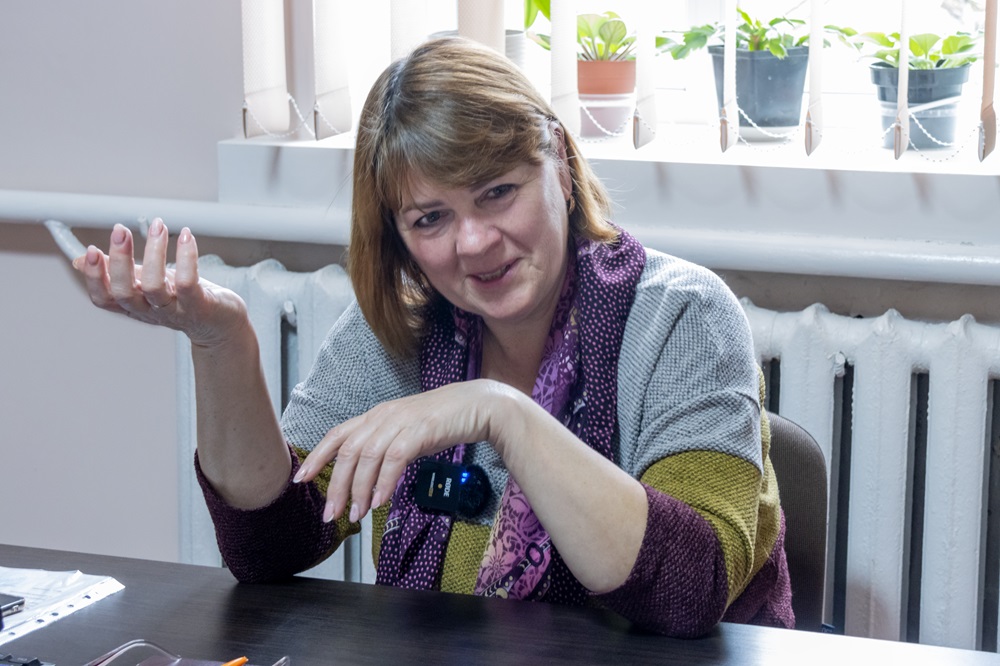
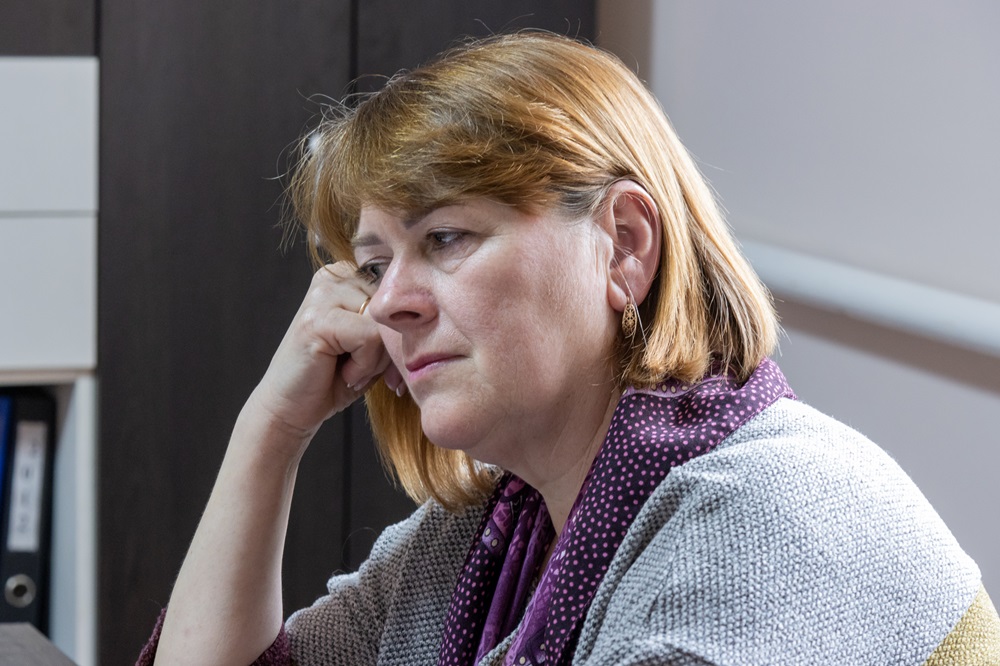
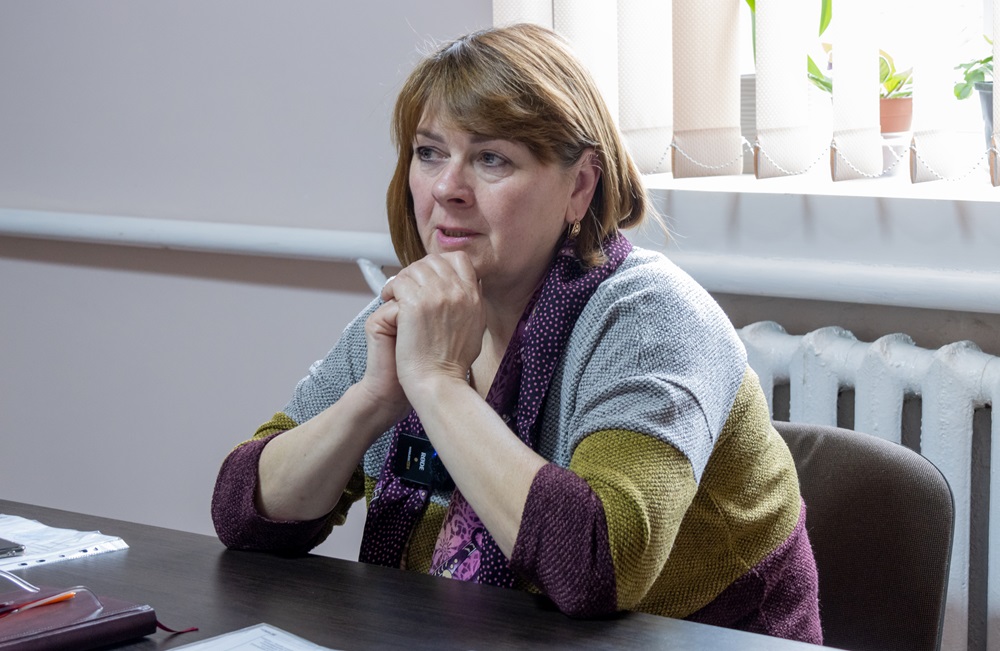
A lot was planned in 2022, because we just joined the Kiptiv village council. There were a lot of plans to create new jobs, clean up, and cultivate. There were many plans. But this is how this war interrupted everything.
My son called me. He works in Kyiv. I called around four o'clock in the morning.
― How are you there, mom?, ‒ says.
― And what are you doing there in Kyiv, that you call me like that at four o'clock in the morning?, ‒ I say.
― We are being fired upon. You know that the war has begun?
― You don't call me. Such a time, maybe some kind of salute in Kyiv, something like that, ‒ I didn't believe it and turned off the phone.
She went to rest again, but after a little he calls and says: "Mom, stand with dad, go to Chernihiv, take your sister and nephew. And it's urgent." I have a daughter in Chernihiv with a grandson who was 4 years old at that time. We sat down with my husband and somehow it didn't fit into my head what to do next. And is it really so? We couldn't believe it until the end, but we got together. He's such a serious guy here, we couldn't help but believe him.
They arrived with their daughter and grandson. And I flew, ran to work with Kateryna Hryhorivna. She was already at work. We haven't figured out what we should do. She contacted the Kiptiv community, with the head. He said that there was no need to panic that everything would be fine. That you are in place. Whoever turns to people, say that everything will be fine. Don't run away so you're all at work. Because what about a village without the support of local self-government bodies? Somehow you need to survive. People don't know what to do. Moreover, for example, we do not have a bomb shelter in the village.
Our house is very large. Children always come, everyone has their own bed. Our house is heated with firewood. We keep a very large household with my husband. There are both cows and pigs, many hectares of land that we cultivate. There are vegetables and fruits.
Then no fuel could be purchased anywhere. They found acquaintances, and some of them were given by the military [Ukrainian] to, for example, take humanitarian aid from Kipty, bring it for us.
Every time going to the track outside the city is accompanied by a risk, because basically you don't know what is happening on the track and how the combat situation is changing. Well how? It was very scary.
The same medicine. We also went with my husband to Nizhyn. They knew that the Russian Federation was standing on a large road there not far from Nizhyn. Explosions were heard, but we were driving because we needed medicine for children and people. They arrived, but there was nothing there, they were all empty pharmacies. They came with nothing.
Hygiene products were very difficult to find. They saved what they could, as they say. Departures were made in the same Kozelets. Several times we bought it for a very expensive price.
I didn't have such stocks before. Once upon a time, mom and grandmother said that it is necessary to have matches, salt. So that there is a lot of this. But I didn't have anything to spare. I once bought a little, it's over there, I can go buy more. And she did not make large reserves.
My husband told me everything: "And I told you, let's buy a bag of sugar or a bag of flour. And you don't need it all". You know, right now I have both a bag of sugar and a bag of flour. Whether I need it or not is another question. But I have it.
It was scary to go to work. Every morning I get up, go to work. I live far away, I had to go to school by bicycle for one and a half kilometers. What was terrible was that I did not see people at all. Especially after the shelling on March 12.
This is the first day we damaged 58 residential buildings. Two burned completely. As they say, thank God that there were no people there. On the first day, 87 windows in the school flew out. We were just in the room. I think that if we had come out by then, we might not have been there.
The man came to pick me up for lunch on March 12. The man was near the school, the car was standing. In principle, we left, the headman and our employee. But they saw that the fire was burning, there the shelling hit the gas pipe. They started calling the Kiptiv community, calling a fire truck from our community, because neither 101 nor 102 were working. And they looked at these big windows. And just then the windows began to fall out. I didn't even understand. The man was standing, he was thrown against the wall. I didn't understand why. And he shouts that fall, fall, why do you stand. And I stand like that and think that this happened?
And it, you know, it is not heard when all this flies. It can already be heard when all this falls and all these healthy school windows fall on you, all these fragments fly.
On March 12, we were shelled three times, but after a certain period of time, about 40-30 minutes later. So when the first shelling there ended, we started leaving to quickly go home. And our technician went and calls, says: "There are dead people here, call the police or something needs to be done, people are covered in blood".
Then the shelling began again. I was worried about how my little grandson and daughter were at home, but, thank God, they were in the house, well, they were very scared, it cannot be said in a word that they were scared. It was very scary to look at them, especially at the daughter who took over her child. She says that she was very afraid that she would not protect him.
Everywhere there were these rockets, these hail or what they are called. It was visible where they were, that they were completely torn, and there is that they were not completely torn, so it was scary to go there.
We had three such large shellings. On March 22, a plane took off and threw bombs at our village. And then on the 24th there was still shelling ‒, this is a direct hit on the cultural center, in residential buildings, the center was completely shelled.
This is every day of life in fear in some way. I thought when it would all end. I have already seen that I simply cannot stand it for a long time both on a physical level and on a psychological level.
I will come home, my grandson is small, my husband, my daughter, we will talk a little easier. They wanted to send their daughter and grandson to go somewhere. They are nowhere without us, but we cannot leave the village like that.
In principle, we had no interruptions with water. People came and repaired here. After the shelling, for example, the wires hung and that's it, there was no light. But people came and helped. We didn't sit without electricity. And gas the same. There was a direct hit to the gas pipe. They arrived, they did it all. There was literally no gas for two or three hours.
The shelling ended, people came out, removed their fences, planted seeds. Everyone has been preparing that there will be fences and we will have spring. My daughter and I sowed tomatoes and peppers in such boxes, and put cabbage on the windows. The whole house was treated with these boxes.
A very good impression was collected. The main thing is that our military operations have already ended, you know, all the people have come to life a little. The village lived, it was already nice to go to work and see people.
It was very scary. You know, some kind of movie, no one can be seen, everything is empty, nothing can be heard anywhere, the shops are all closed, there is nothing to shop anywhere. Once everything died out, it was scary to survive it all.
I wanted to know where all this is [the collision line]. They knew that we had it not far away, in Yagidny they [the occupiers] were, in Krasny, there near Nizhyn, this is a big road. We knew that we were walking from the big road, standing there. People said that there were rumors that there was no road to Kyiv. You can drive up to Kozelets, and there is no longer a road there. Not only by news, but people told each other who knew what.
News is always good to see how beautiful and optimistic they are. And yes, if you know that people died there, people died there, acquaintances already know that you knew them, people could still live as long, but this war canceled it all.
It's my birthday on March 14. And it was the man who wanted to give me such a gift. He went to Nizhyn on March 12 and bought me a small dog. The man came to my work on the same day and said: "I'm taking you to lunch. Your birthday is coming soon, but today we agreed, I brought you something there".
And here is the shelling. Terrible, big, everything is pouring. People died. Such was the situation and the situation. I will tell you not festive, not festive at all. And we called the police, as it were, called all this, people were taken away, we went home.
We are coming home, here the shelling has started again. They started hiding. My granddaughter carries it and says: "Grandma, here is a gift for you. Grandfather brought you a gift from Nizhyn". And such a small ball. Well, you represent? I was very glad.
You know how a grandson ran with a dog with this one in his hands, holding this little ball like that, it was a holiday for me. That's right, it was a holiday. And that everyone was alive after the shelling.
The grandson is small, he often remembers that "Oh, and Gromchyk has already grown up, and Gromchyk is already two years old. Here is such a big dog, and how small he was, how we hid with him, and now he is already like that". Then he remembers it, remembers how they hid, how little Gromchyk was, how he hid, how he protected him. It remembers.
It's scary. Oh, I try not to get into these memories, because I started to cry a lot from them. I seem to hold on, I counted that a strong woman in principle, but now I see that she is not. It was somehow wrong then, I didn't cry then. Well, it's hard to survive. I try not to mention it anymore. I go on, I work, I do something important.
link to історію