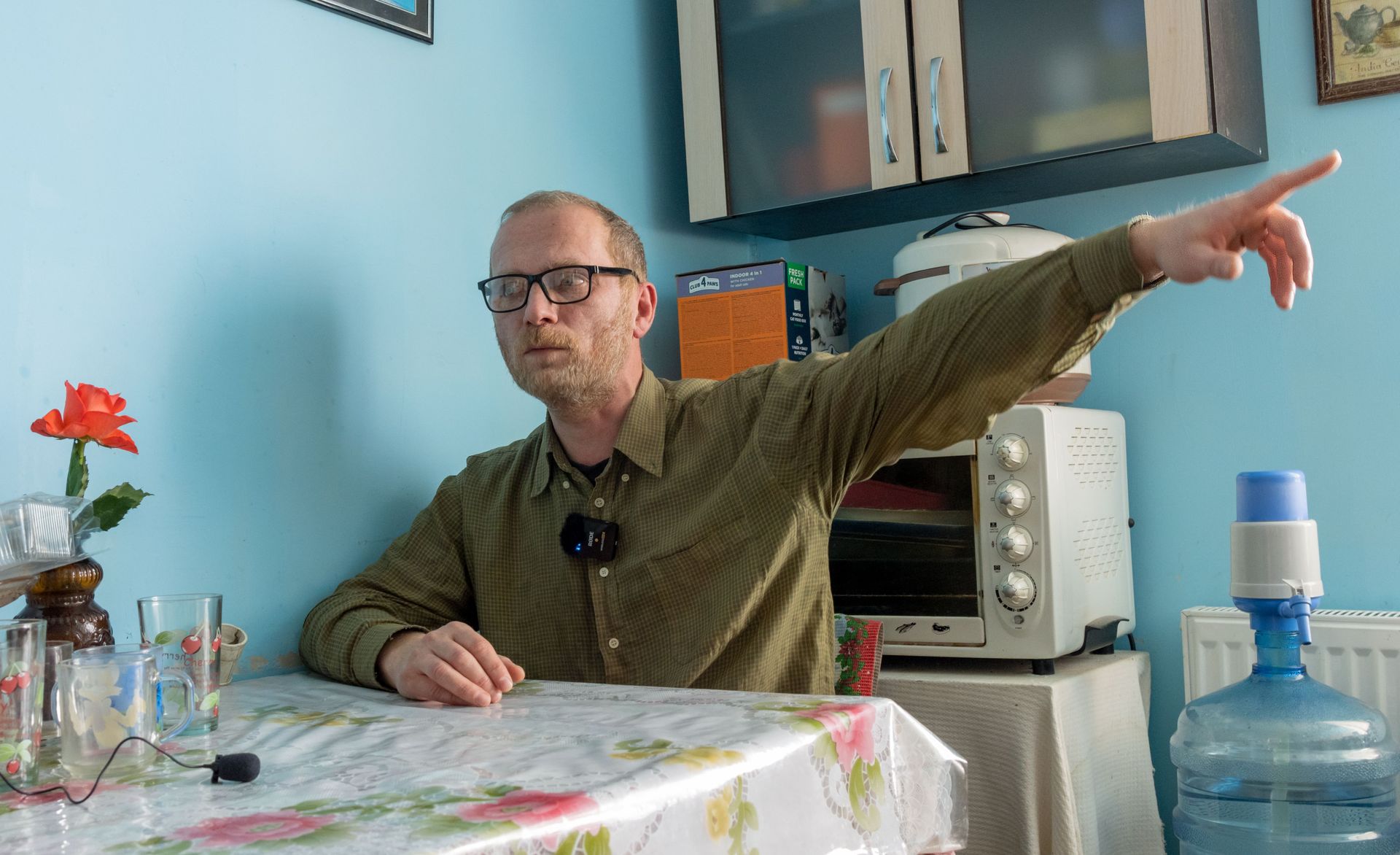
Interviewer: There is such a thing as collective memory: our stories, experiences that create it.
Anatoly: Everyone has their own, personal one. There is no collective memory. So we are sitting here at three, and tomorrow we will ask: "What happened?" and everyone will tell their own. About the same thing, everyone tells their own, sometimes even the opposite. Therefore, there is no collective memory. It (memory) consists of personal stories.
No matter how cool it is, history will not be studied from personal stories of which there are a million. You can't even listen to or watch them physically. Therefore, there will be some generalization. And what will this generalization consist of? From what will be thrown away are details that may not be so important. Maybe they are too personal.
But in the family? There will already be details. Therefore, it is worth recording these stories in a fresh way. When people still remember not a few facts, dates, times, but also remember their emotions. How they treated what was happening.
Interviewer: If you know the history of your kind and have personally experienced the events of the full-scale invasion of Russian troops into Chernihiv Oblast, Ukraine in general, haven't you found any parallels for yourself?
Anatoly: Not only found, but even analyzed. Why so and why is it different. How it could have happened and what it has in common, what conclusions can be drawn from it.
I know the conclusion. Various wars that took place on our territory and in which my relatives participated (for example, the same Finnish war or the Japanese war). And I draw one conclusion. It is impossible to prepare for any war that will follow. In principle. It is completely different for the military, for the civilian population, and for everyday life in general. As my grandmother used to say, "War ‒ is not as scary as memories of it".
War is not terrible (in the moment). You don't understand anything. You... are in a completely different state. And then, when you remember, you already begin to understand: what it was and how scary it was, to what limit it was half a step away. And that's all.
How my daughter calls her friend when the Muscovites retreated. The connection appeared, the phones were loaded. Girlfriend in Lukashivka. And the daughter says: "How are you?" They answer her: "They shot a little there. They got to the church. There the roof was blown off. And so normal. You've got what?". "And we shot twice", ‒ says the daughter.
When all the shelling was over, I walked around like that. Then google cards appeared. Fresh. I counted 84 funnels within a radius of 100 meters from the house. That's how it was. And then what did you know?
That's where the house was torn by a tornado, he didn't explode. There, the rocket sticks out from the hail. All. I didn't know anything else. Yes, explodes. People died here. All this happened here, but how was it perceived? It's completely different: not for me, then you shouldn't pay attention to it now. Then someday. Well, it was so.
There were neighbors across the street and across the fence. These are all neighbors. Others are far away. We have a well here after 100 meters. They took water there. They exhausted to the bottom. No one used it before. They met and saw each other there. When I took the water, I lay three times for half an hour, because it was scary to return. He reached, took on water, and fired back. And the shelling took place here on this edge. This is the edge of the village: my house, there is a farm and that's it. Behind the farm field. The enemy is already behind the field.
We counted only those shellings that were on us. Then they didn't turn to weight, sat, talked. Already somewhere in the middle of March, we sit, talk and like a shooting tank, then you think ‒ let me at least say, because that's how fear got your head.
My only phone was. Could call my sister. She lived in the Rivne region. And the connection was something like this, it could appear in an hour for five minutes. It was necessary to go out into the open space, into the garden, and there from the tenth to the twentieth time something would catch. We then learned that it was EW that was working. As they [Russian troops] left, it was generally possible to call from the house.
Well, a village is a village. We did not prepare for war, but we prepared for winter. Winter in the village, even in such a place as our Kiinka ‒, is difficult to get there. Those trained were a covid that a minibus may not drive. That's why they made stocks of cereals, something that doesn't spoil. There were potatoes in the cellar, twists. But, of course, there was no meat. It was very, very little. Of course, what would quickly deteriorate was digested.
And we had gas, electricity here (until February 24, 2022) and I did not collect firewood. Kiinka lived in a completely different way than other distant villages. Few people had a wood-burning boiler, or a stove. Where to get firewood? Some broke fences, some cut their trees. We have a sawmill nearby. There, he took the sticks and boards that he grabbed. And the tree is wet, raw, frozen. And that's how they somehow prepared.
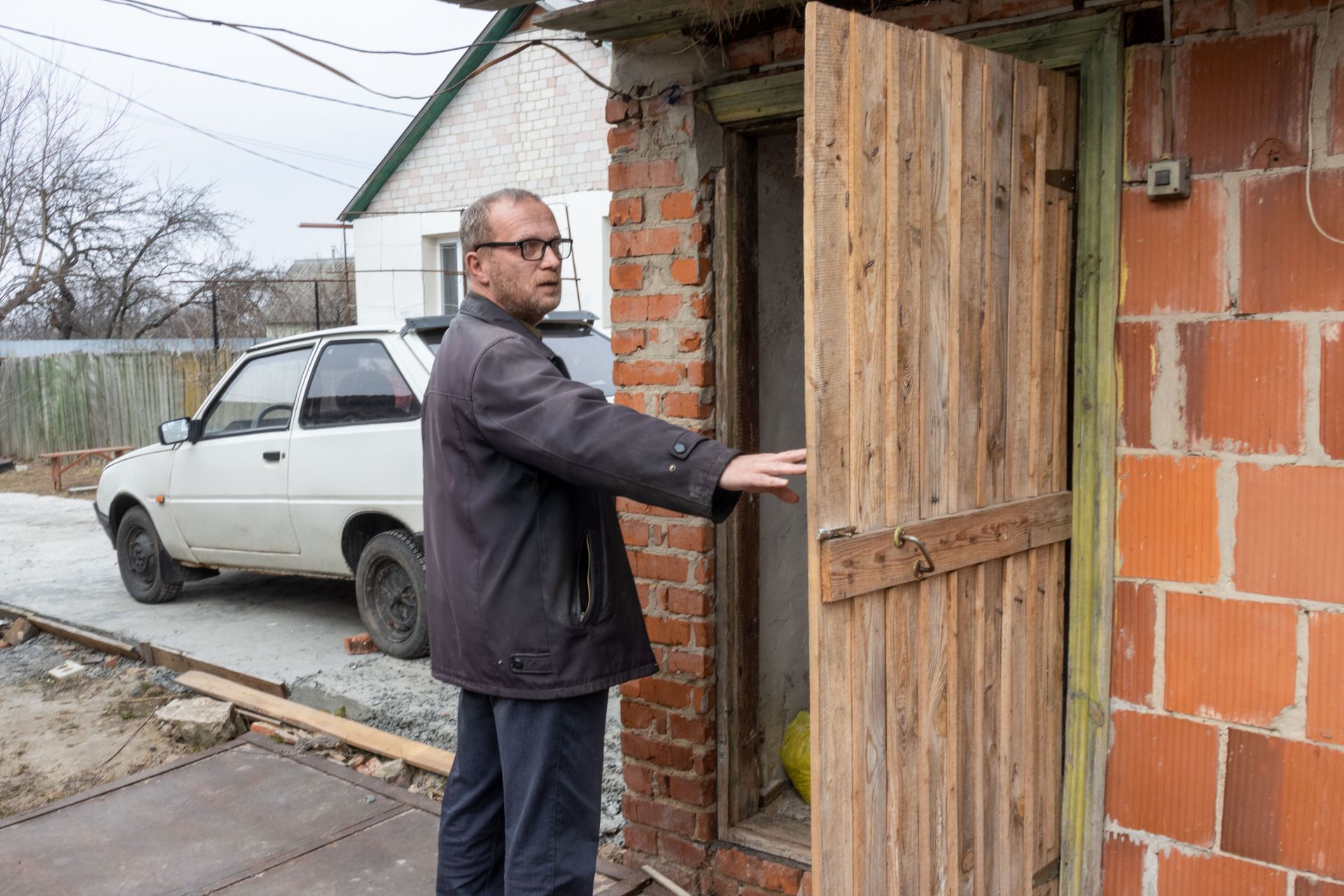
And after February 28, when there was the first massive shelling, we already spent the night in the basement. Two shells arrived, windows were knocked out, and the barn collapsed. The dog was contused, he left two days later. The cat was in the house, living, but then the dogs bit.
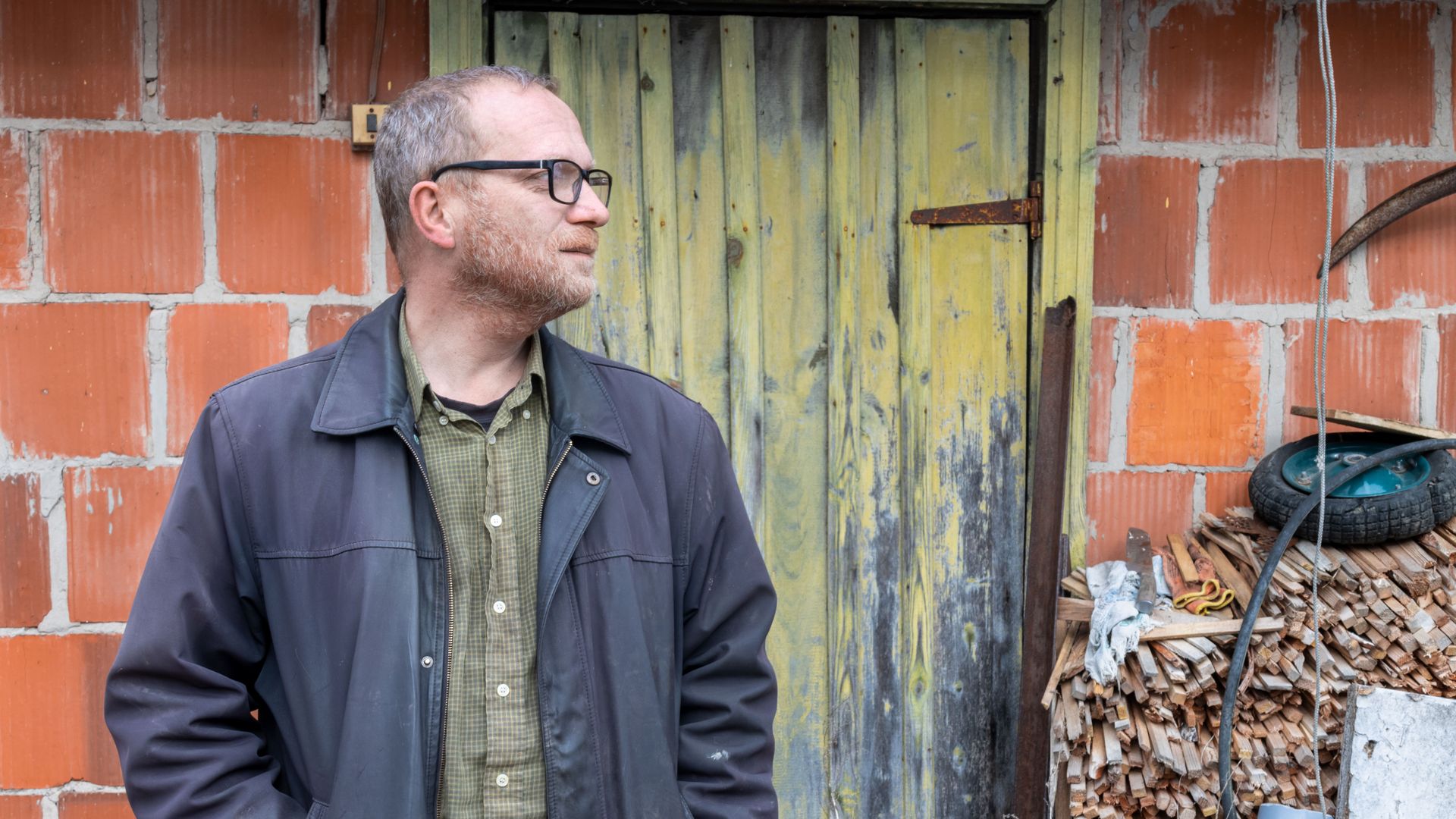
It was at night. We were still sleeping in the house, because our daughter was afraid herself. They slept in Nikina's bedroom: I'm on a mattress on the floor, they're on a bed. And here is the shelling. We didn't even take out our shoes half a minute before two shells arrived in the yard. If it remained in the house... The wreckage pierced the house through and the room in the place where they slept. If it weren't for the pear that still stands there and the pears give birth beautifully, then that's it... The projectile hit her, split into two parts ‒, one went to the toilet and shed, and the other to the house and broke the windows. If it weren't for the pear, I probably didn't have my whole family.
It was cold in the cellar. Very, very cold. This is the worst thing that during shelling, ‒ is cold. Because he did not stop, did not disappear. Shelling? Well, how many are there? 10-15 minutes, an hour. And that's it. Let's go out. It stopped. And the cold does not stop. The cellar does not warm up. And it also gains moisture.
The old mattresses we were pulling in there, some shaking. I got two double doors of such length into the basement. They threw mattresses on the ground, upstairs and then somehow lay down themselves. Those mattresses have become such in a day that at least twist [from the water].
And I remembered that there are many, still reserves of one hundred millimeter foam. The entire cellar was sent with this foam, and everything was up the carpets and paths ‒. This is how we protected ourselves from the cold that came from below.
And of course, dressed. It was very, very difficult to move. And my wife never lived in the village. She doesn't know how it's wood that drowns something there, how to cook on the fire.
Then, with us, food appeared unexpectedly. Several shells flew into warehouses with grain. And there was wheat, a little millet. And people dragged it, because it will disappear there, it will burn. I have so many people, I did not even know what is in Kiinka. They all drove down our street, walked and pulled this millet, wheat. And we cooked millet, soup with millet.
The man was who took some help, diapers for the children, some food. Well, I picked up what was missing somewhere, who. And he once brought two kilograms of chicken. It was so frozen.
I'm a mushroom picker, I had a lot of mushrooms, we cooked them.
I lost 14 kilograms in a month, and my wife lost 8. No matter how hard the food was not enough, because it was cold.
I wanted bread the most. Sometime in mid-March, volunteers began to bring bread. A crowd gathered, a queue, half a loaf was not given to a person, to the yard. That was. Tricks. Even we tricked, we didn't know our wife in the face, but we knew our daughter. They went to sleep and received a loaf for two yards. It was five times in a month that they received bread.
When they received the first loaf, the wife went home and cried. She finally took the bread. That's how it was. And the tastiest thing was ‒ this bread with strawberry jam. Now the jam is standing, no one wants to look at it. That's how it was.
The fact is that I am the head of the pagan community of the city of Chernihiv, which is called "Kola Severshchyna". I have a temple in my yard. On March 21, pagans have a big holiday ‒ Equinox. Shelling is being fired, something is on fire in the city, I conducted the ceremony. He shot a short video.
There was a mechanical clock, times were watching on it. And somewhere on March 6 or 7, we are already confused about what date it is today. Sixth or seventh? Well, they asked, looked there. Already on the last percentage of charge in the phone ‒ seventh. And I started recording every morning what the date is today. And write down what? This is bad.
Why did we record? Because March 17 is my birthday, March 31 is my daughter's, April 4 is my wife's. March is very important here, you need to know the dates.
And then somewhere on the 20th, there was an opportunity to bring one phone to charge two hours a day after three streets. That's how they charged in turn.
They gave as many as ten cigarettes for my birthday. And the neighbor brought a dozen eggs. These were holy and such gifts. Friends brought (where did they get it?) to their daughter on her birthday chocolate. And on his wife's birthday on April 4, we went to Podusivka and finally washed, slept warm for the first time. They took two liters of gasoline to the car. I was pulling the battery to the generator on my hump. We recharged it.
I understand that not everyone can talk about it, but they are silent about the toilet. Of course, when it's one family: me, my wife, my daughter, it's something else. Although, too, not everyone can force themselves. There is no comfort there. And people don't even think that they will have to face it.
I wasted my time dismantling the collapsed barn. The wife was miraculously exposed to Japanese drawing. Of course, cooking took a lot of time, because there are no amenities.
It took a long time to pull all the shakes out of the basement drying. If there was an opportunity to dry, pull it out, and it was heavy and uncomfortable. Pulled out. Decayed. Dried. Then...
Again, it took such a long time to leave the bread to wait. Go give the phone to charge. Then go pick it up. And this is not five meters.
Some such trinket before the war took minutes, so it could turn into half a day.
It all comes to mind, it is constantly mentioned. And so, for example, my wife and daughter do not go to the cellar for potatoes. They can't. Everything is mentioned, everything is constantly mentioned. Thinking. We already knew on which brick, what pattern of cracks.
link to history