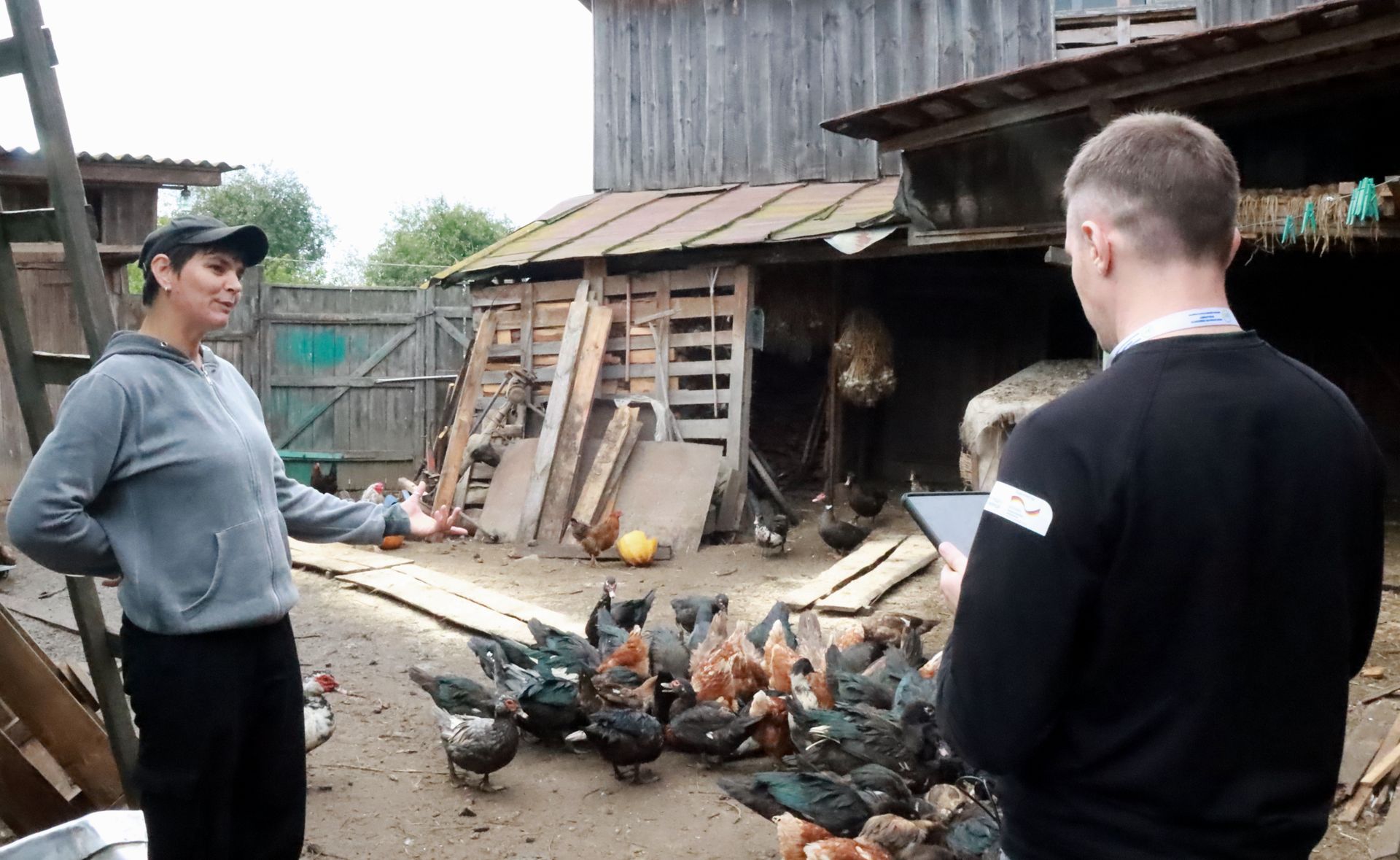
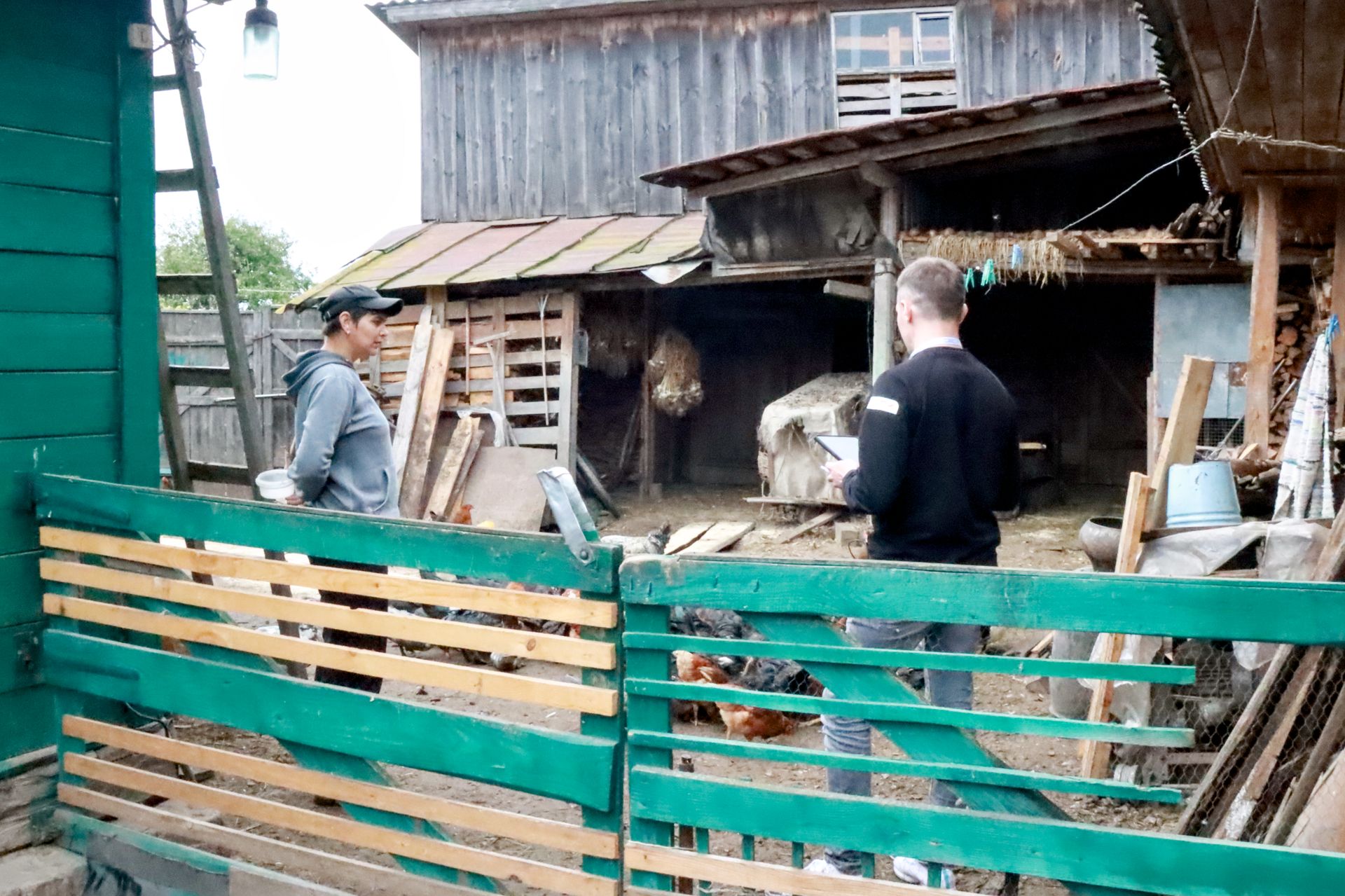
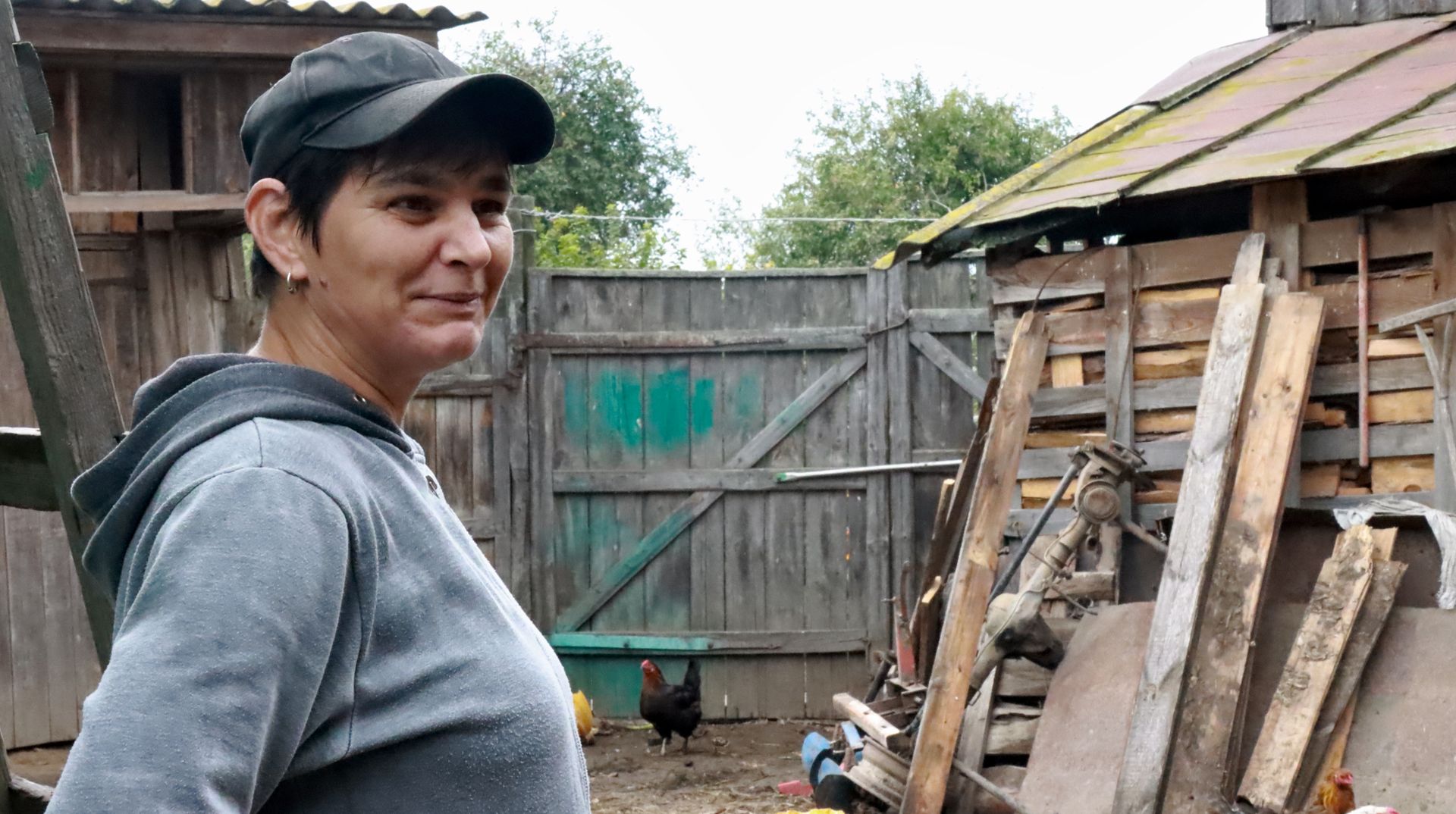
The village of Sobych in the north of Sumy Oblast lives its quiet but stubborn life. The war here is about — near the border with the Russian Federation, air alarms have become common, but people do not give up. Among them is — Natalia. Together with her husband, she raises four children, takes care of the economy and, despite all the difficulties of the war, finds the strength to move forward. Thanks to a project from the Norwegian Refugee Council (NRC) in Ukraine, implemented by the public organization "Association for Democratic Development", Natalia's family was able to strengthen their economy: to purchase grain, a mill, an autoclave and poultry. This support has become more than just material help — it has returned faith in stability and the ability to plan life, even when there is a war going on around.
My name is Natalia. My family and I live in Sumy Oblast, in the village of Sobych. I work, have my own farm, raise children. We are a large family — I have four children: the oldest is 22 years old, the youngest is almost a year old. We try to do something for ourselves, help guys, we live like ordinary people.
I learned about the opportunity to participate in the program through Facebook —, a message was posted in our local group. I thought: let me try it, I filled out the — questionnaire and that's it. Previously, she did not participate in such projects, so she did not know what to expect.
When I found out that we would receive help, at first I didn't even know what to spend it on. And then, when they received the amount, it became clear: it must be used wisely, because in fact it is not so large.
First of all, we decided to buy grain for poultry, because we have a lot of it and we need to feed it to grow, so that there is meat. This was the first and main need. Then they decided that they needed their own manual mill so that there was flour. They also bought an autoclave so that the meat could not only be cooked immediately, but also canned for later.
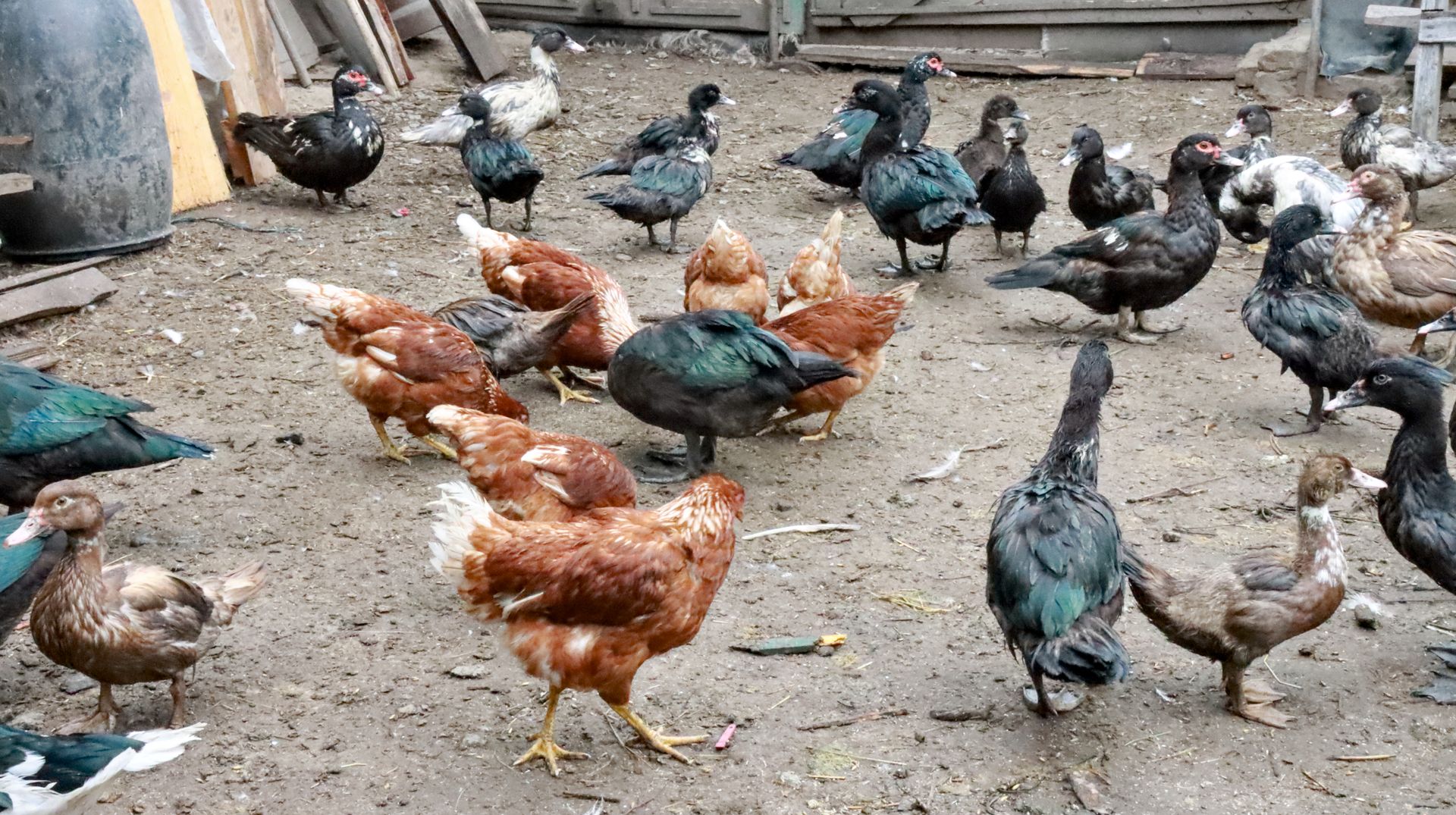
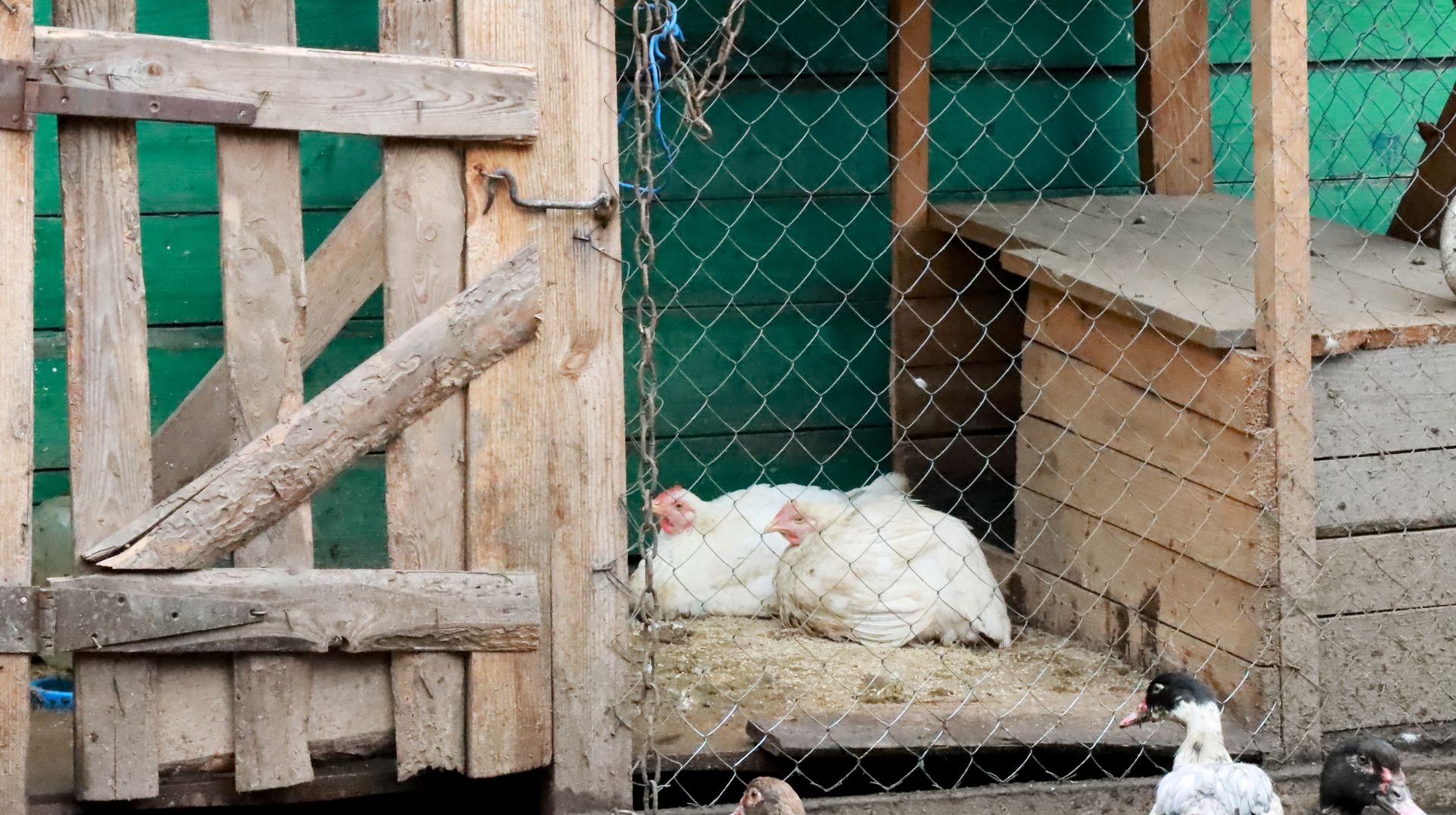
In total, two tons of grain, a hand mill, an autoclave and chickens were purchased with these funds — part for breeding, part for meat.
We had poultry before, but over time it came to nothing. And now they have bred indo-ducks again —, the older ones have already bred ducklings, about a dozen, and the younger ones, probably dozens, seven. I don't even count after the fifth ten.
I have been doing ducks since I returned home from Kyiv region — it was nine and a half years ago. I wanted to have ducks, and that's how we do it year after year. They are output differently — some earlier, others later, but always have their own.
We cultivate many — of our 19 acres of land, we also took almost 20 acres from our neighbors for cultivation. There is enough work. The purchased grain makes it possible to think ahead: for example, now we have a young heifer, who in two years will be another adult cow. In order for a heifer to grow strong and milky, flour is needed, which was previously lacking. Now they bought a mill to grind flour and feed the heifer. Because if there is milk — no one is hungry.
Children help me. The eldest son is almost 15 years old, the average is 9. They can take care of the smaller one and help with the household. Combine, replace each other — otherwise, no way, such is life. The middle son goes to school on the second shift, and the eldest studies in a mixed format: three days at school, two — remotely.
When the full-scale invasion began, we, like everyone else, were caught off guard. It was winter, and there were no problems with feed then, because we have always been stocking since summer. Now it has become more difficult — grain is expensive, and we do not have our own shares, so we always have to buy. This year, thanks to this project, we were able to stock up on enough grain. War is war — is difficult, but we try to hold on.
We do not plan to move anywhere. Here is our home, our people, our children. I have a small child — where to go? And, in fact, no one expects us anywhere, so we will stay at home.
In autumn, we want to plant more garlic —, we have our own, but we will expand the plantings so that it is enough for sale. I would also like to buy fertilizers for the land, because humus is not always available. We have some of our equipment, but not everything we need. So the help we received was very appropriate, and we are sincerely grateful.
That's how we live — we work, we grow children, we run the farm, we hope for the best.
Villages in the north of Shostky district of Sumy Oblast, like Sobych, are in the zone of increased risk. The security situation here is extremely tense: daily shelling using mortars, artillery, guided aerial bombs (CABs) and drones has become a terrible reality for the community and residents.
In these difficult conditions, aid programs such as the project from the Norwegian Refugee Council (NRC) in Ukraine, implemented by the public organization "Association for Democratic Development", become especially important. Providing targeted support to ― is a tool that allows local residents to maintain a farm, ensure food security and continue living on their land.
People's conscious decision to stay and fight for their community demonstrates that in conditions where the enemy is trying to destroy normal life, external support becomes a critical support. It enables local residents to provide for themselves on their own.
The project is implemented by the NGO "Association of Democratic Development" together with Норвезькою радою у справах біженців (NRC) в Україні with the support of Norway.