In the village of Klyshki, in the Sumy Oblast, every resident learned to live "here and now", without planning for years to come. For Mrs. Elena, a mathematics teacher with 40 years of experience, the war changed the usual rhythm of life. The modern realities of online training and constant shelling pushed her to find peace in working on the ground. Ms. Elena retired and devoted all her time to her family and household.
Olena Yuriivna remembers how she watched the experience of a matchmaker who had already received help from one of the international organizations and she made a new large greenhouse on her plot.
The village council reported that registration was announced within the framework of the project "Assessment of agricultural markets and needs in the Shostky district and support in the livelihood of households from among IDPs and the war-affected local rural population from among vulnerable categories of the Shostky territorial community of the Sumy region", which is implemented by the NGO "Association of Democratic Development" together with the Norwegian Refugee Council (NRC) in Ukraine with the support of the Federal Government of Germany. Internally displaced persons and the local population of the Shostkin and Yampil communities of Sumy Oblast from among vulnerable categories engaged in agriculture and in need of support were invited to fill out the questionnaire.
When she had the opportunity to fill out the registration form for participation in the project, the 69-year-old teacher hesitated at first. "I was afraid to fill out the questionnaire myself — suddenly I will make a mistake and everything will not go away". Daughter-in-law helped, — smiling heroine. — At first I didn't expect at all. I thought that at least a film or coating would be given to the old greenhouse to patch. I asked this question to the girls from the Association for Democratic Development, and they tell me: "No, we can only have a new one, from beginning to end". We consulted with the children at home, they say: "Mom, you have to take capital to work and not think about where to patch".
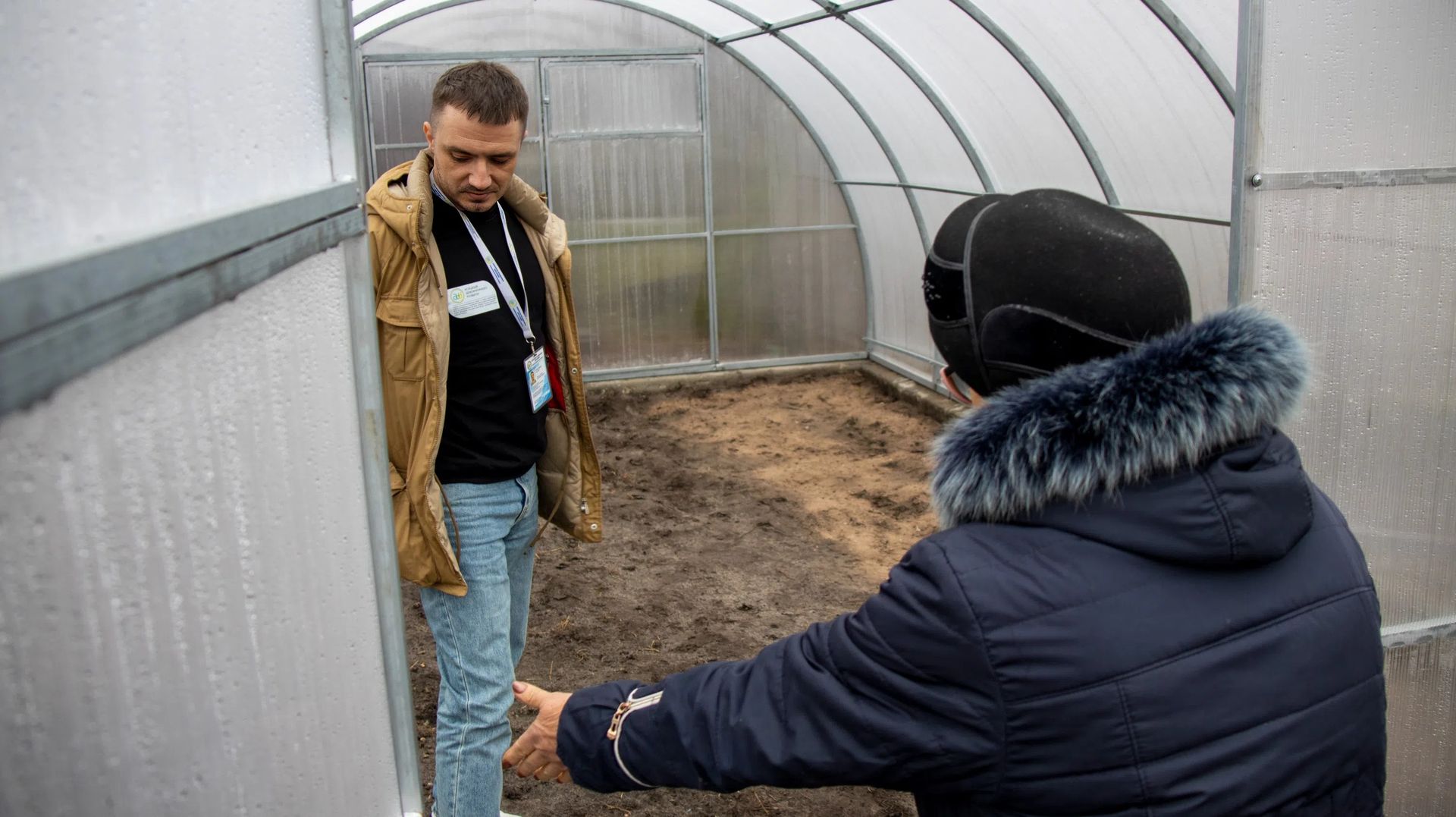
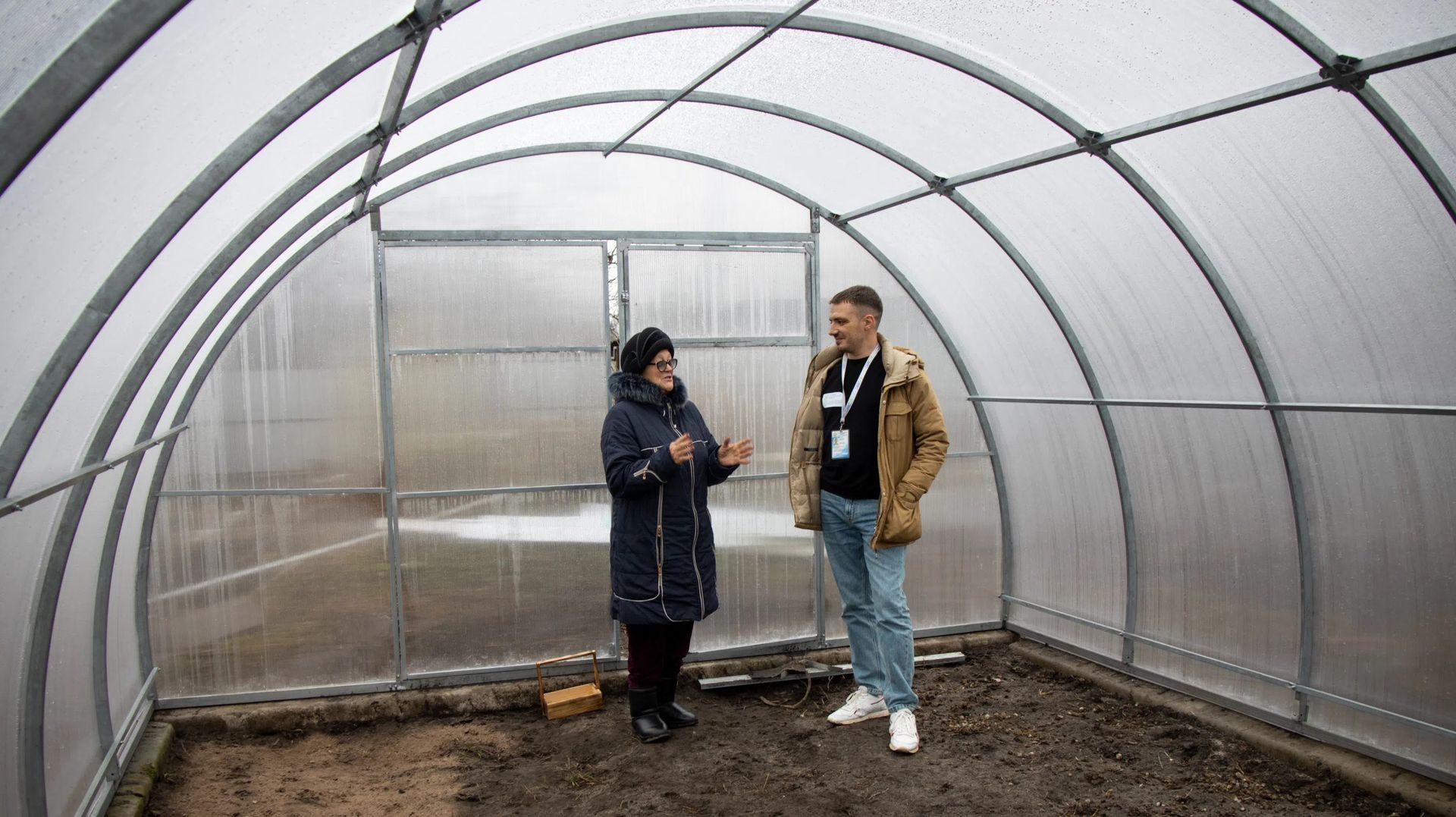
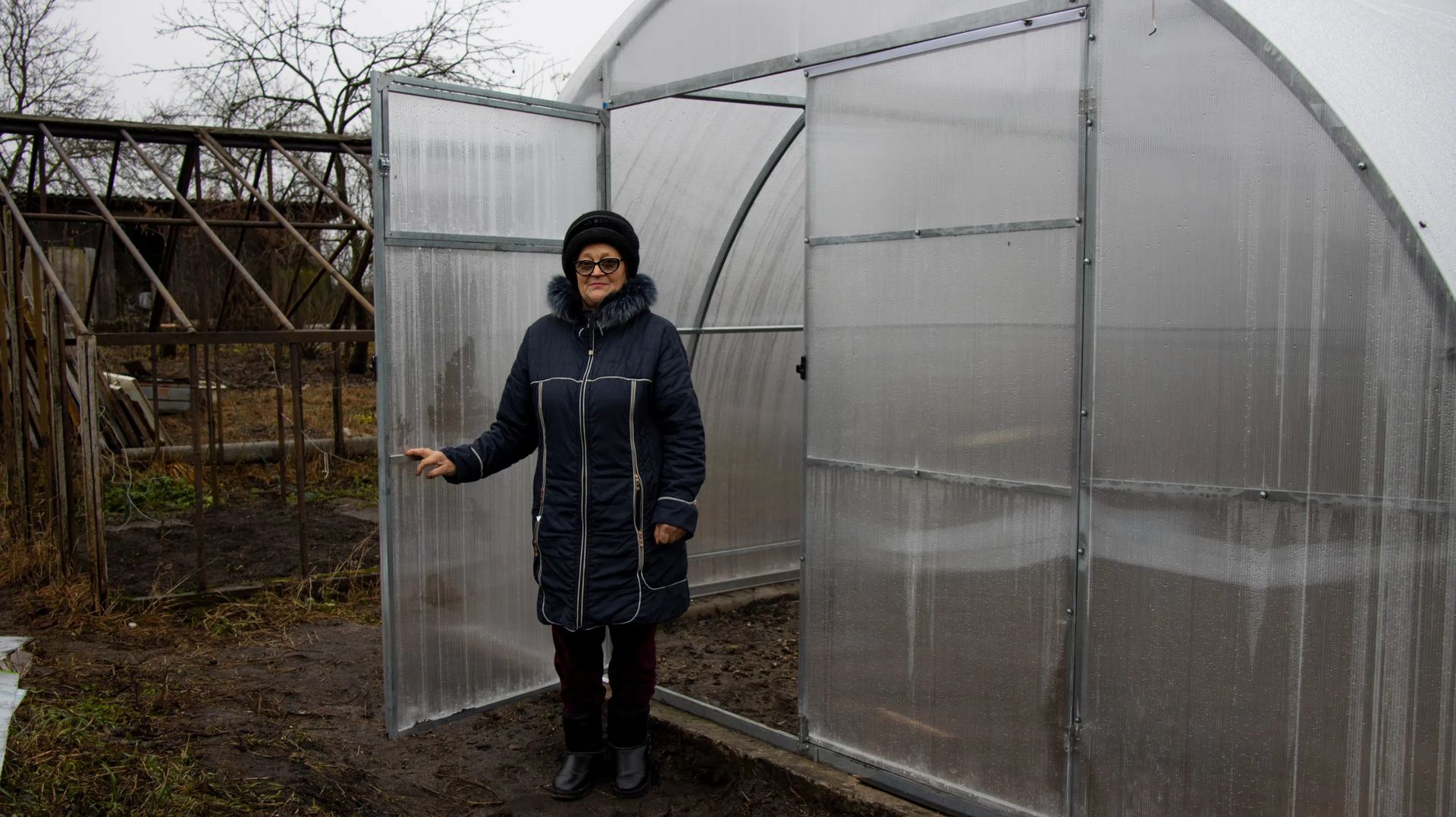
Ms. Elena — is not new to greenhouse business. "You won't believe it, we had our first greenhouse back in 1982. The son was very small then. At that time, we lived and worked at school in Chapliivka. My husband is a great experimenter: he made heated greenhouses from biofuel — horse manure. We had cucumbers there perfect, leaves — like huge shovels! Already in April they had their fresh vegetables for children", — proudly recalls the woman. Thanks to participation in the project, she was able to buy a new large greenhouse and has already installed it on the site. The land inside the new greenhouse has already been dug up and fertilized with ash and chicken droppings. There is a tile in the yard —, the heroine has already calculated how to lay out a neat path inside so that it is convenient to process plants.
"Work begins long before spring. Already in January-February, we prepare seedlings, the soil is harvested. We will grow classics: cucumbers, tomatoes, greens. Once tried basil — did not go away, too much gloom. But our mint and arugula grow anyway. By March, it will be necessary to deal with seedlings, and then plant them in the greenhouse", Ms. Olena said, at the end of the conversation.
For Olena Yuriivna, this greenhouse — is more than a frame covered with polycarbonate. This is a sign that even after the end of his teaching career and despite the military challenges, life goes on.
The project is implemented by the NGO "Association of Democratic Development" together with Норвезькою радою у справах біженців (NRC) в Україні with the support of the Federal Government of Germany.